I really enjoyed the first in this new cozy/historical mystery series, focusing on two apparently mismatched undercover detectives, Jane and Arthur. I already have the second installment in the series to read for the near future!
I liked the writing style of this book, which reminded me a bit of the Maggie Hope series by Susan Elia MacNeal. I do love anything from the WWII period! I also chuckled out loud several times while reading as well — always appreciated!
Thanks so much for my copy and for making me part of the tour!
Here’s the scoop:
Meet Miss Jane Treen – the coffee-drinking cat lover dressed head to toe in tweed, who just happens to be a secret super sleuth!
London, 1941: Miss Jane Treen is at her desk, strong black coffee in hand and fluffy ginger cat by her side, when her top-secret government work is interrupted by an urgent call to Devon. A woman has been found dead in a lake in a place where she shouldn’t have been. Jane needs to gather the clues and find the killer before someone else from the agency gets hurt…
Shy and handsome code-breaker Arthur Cilento is bewildered by the arrival of the efficient Miss Treen and her cat Marmaduke. She bursts into his life unexpectedly, forcing him out of his comfort zone. The reluctant colleagues huddle near the warmth of a crackling fire in Arthur’s country home, working to piece together the murderous puzzle at hand.
In the sleepy Devon village, someone is hiding something: but is it the busybody vicar and his sister, the dutiful housekeeper and her secretive son, the stern librarian, or someone else altogether? And who were the people with the woman in the lake on the day she died?
No sooner have Arthur and Jane have drawn up a list of suspects, than a parcel reveals a clue that sends them in hot pursuit of a coded diary stashed in a village church. But as the heavy wooden door slams behind them and a key turns in the lock, one thing is sure: they need to unravel the truth and crack this code before the killer decides their number is up…
But if they can catch the culprit in time, might this unusual pair become the finest crime-solving partnership since Holmes and Watson hung up their hats…?
If you love twisty crime novels, top-secret intrigue and the very best of Golden Age mysteries, then you will adore Helena Dixon’s totally gripping cozy novel, perfect for fans of Agatha Christie, T E Kinsey and Verity Bright!
Author Bio:
Helena Dixon is the author of the best-selling Miss Underhay murder mystery series and lives in Devon. Married to the same man for over thirty-five years she has three daughters, a cactus called Spike, and a crazy cockapoo. She is allergic to adhesives, apples, tinsel and housework. She was winner of The Romance Prize in 2007 and Love Story of the Year 2010 as Nell Dixon.
I love the writing of novelist Jennifer Weiner so I was thrilled when I was offered this title through her publisher and Net Galley. This was a story of two sisters who hit it big in the music world, but then a terrible accident destroys everything they have. These two, Cassie and Zoe, could not have been more unalike: one beautiful and self-centered and attention-seeking, one shy, gifted, and wanting to stay out of the limelight. This story is a bit heart-breaking, though I loved the ending. What rings true throughout, as it often does in Weiner’s work, is that you should not be judged by how you look, but by how you are inside and your actions.
Here’s the scoop:
From #1 New York Times bestselling author Jennifer Weiner comes The Griffin Sisters’ Greatest Hits, a deeply moving novel set against the glitz and chaos of early 2000s pop stardom. Equal parts heartfelt family saga and behind-the-scenes look at fame, this is a story about sisters, secrets, and the power of second chances.
Cassie and Zoe Grossberg were thrust into the spotlight as The Griffin Sisters, a pop duo that defined the aughts. Together, they skyrocketed to the top, gracing MTV, SNL, and the cover of Rolling Stone. Cassie, a musical genius who never felt at ease in her own skin, preferred to stay in the shadows. Zoe, full of confidence and craving fame, lived for the stage. But fame has a price, and after one turbulent year, the band abruptly broke up.
Now, two decades later, the sisters couldn’t be further apart. Zoe is a suburban mom warning her daughter Cherry to avoid the spotlight, while Cassie has disappeared from public life entirely. But when Cherry begins unearthing the truth behind their breathtaking rise and infamous breakup, long-buried secrets surface, forcing all three women to confront their choices, their desires, and their complicated bonds.
With richly developed characters, a nostalgic nod to the pop culture of the 2000s, and a resonant tale of ambition, forgiveness, and family, The Griffin Sisters’ Greatest Hits will captivate readers from the first note to the final encore. Whether you’ve followed Jennifer Weiner for years or are discovering her for the first time, this book is a must-read for music lovers, fans of sisterly dramas, and anyone who cherishes a great story of second chances.
My friends at Books Forward sent me some information on this new novel, featuring the author’s ancestor who came to American from Norway and was institutionalized in a mental hospital for most of her life.
The Blue Trunk traces the journey of Marit Sletmo as she comes to America and the quest of her great great niece, Rachel, as she seeks to discover Marit’s story, while writing her own.
Here’s the scoop:
When Ann Lowry inherited an ancestor’s blue travel trunk, she had no idea that this artifact was about to take her on a three-year journey of discovery. She was told that the trunk’s previous owner, a great-great aunt, had been institutionalized for insanity. Despite meticulous genealogy research, she was unable to uncover any facts about her and concluded that she must have spent her entire adult life in an asylum. Lowry was inspired to write The Blue Trunk, (Sept. 10, 2024, Koehler Books) to help reclaim her ancestor’s voice and shed light on these all-too-common institutionalizations. Seamlessly weaving historical fiction with contemporary life, Lowry’s tale explores identity, strength, and connection across decades.
Rachel Jackson’s idyllic life takes a dramatic turn when she discovers a woman’s scarf in her politician husband’s computer bag. But in an election year, seeking answers to questions of infidelity is not an option. When her mother gives her a family heirloom, a travel trunk owned by an ancestor, she finds a distraction. As she immerses herself in its contents, she discovers a woman whose life is vastly different from her own. Or is it?
Determined to dispel the notion that her ancestor Marit was insane, Rachel sets out to unveil her unknown story. In the interwoven narratives of these two women, who are bound by blood and a shared struggle, The Blue Trunk is a poignant exploration of identity, love, and unwavering strength.
Here’s a bit about Anne:
Ann’s journey into the realm of storytelling was foretold by a Sedona psychic in 2001. That prophecy became a reality two decades later when Ann discovered a family heirloom, a travel trunk from Norway, which sparked the genesis of her debut novel, “The Blue Trunk.”
A writer her entire life, Ann holds a Ph.D. in Communication from the University of Minnesota. Her career has been dedicated to teaching and helping others navigate communication and resolve conflicts. Ann is fascinated by the dynamics of relationships, discord, and the intricacies of the human condition. Ann successfully completed the Loft Literary Center’s Novel Writing Intensive course in 2022.
Alongside her passion for fiction, she has contributed to academic journals, penned thought-provoking opinion pieces, crafted engaging content for online platforms, and provided insights on the federal management of disasters.
When Ann isn’t immersed in the world of writing, she finds solace in the pool or the lake. She cherishes playful moments with her rescue-turned-therapy dog, Loki, and also enjoys reading, golfing, and indulging in the art of cookie and bread baking. Fly fishing is her newest hobby. Most of all, she savors precious time with her family.
Ann and her spouse, Karen, and fur child, Loki, live in Timnath, Colorado, where they enjoy the beauty of nature daily. Learn more about Ann at: www.annlowry.com
I loved this story because not only was it a story within a story, but it had a focus on strong women, as well as resilience and identity. I loved the ending and was so hopeful that the story was largely based in fact. So I asked if I could do a Q&A with Ms. Lowry, and here it is!
BBNB: Hi there! I really enjoyed your novel so much. I’m curious. Is there really a blue trunk? And how did you first get interested in your ancestor’s story?
Yes, there is a blue trunk. It still sits in the foyer of my home in Colorado and has the name “Marit Sletmo” painted on the front. My mother inherited the trunk and while I was aware of the fact that my great-great aunt used it when she immigrated from Norway, I knew nothing of her life until I suggested naming my daughter “Marit.” My mother reacted to my suggestion with horror telling me that Marit was “insane” and that she and her sisters were never allowed to talk about her. Needless to say, I didn’t name my daughter after her. But I thought of her, of course, every time I saw the trunk. A few years ago my mother gave me the trunk and I started researching her on genealogy websites. But my research came to a dead end rather quickly. I concluded, sadly, that Marit likely spent her entire life in an institution. I knew I wanted to reclaim her life by writing a novel about her.
BBNB: As a person who studied psychology in college, your novel reminded me of the truly inhumane ways that people with mental illness were treated. How did you research that part of your novel?
The National Institute of Health and the Library of Congress have good information. But probably the most compelling information for me came from information gleaned from investigative journalist Nelly Bly. In 1887, Bly had herself committed to the “lunatic asylum” on Blackwell’s Island in New York. She spent ten days there and documented the horrific conditions that existed there at that time and noted that some women were sane but had been committed by family members who wanted them out of the way.
BBNB: Is Marit’s journey very similar to your own great aunt’s? Did you have that level of detail of her life or did you have to use some creative license? Did you have to track down clues to find answers like Rachel did in the novel?
Most of the book is fiction because I reached a dead end early with my genealogy research. I had an autograph book that she had signed in Wisconsin (my only clue) and I knew that she had indeed made it to the United States and that she could speak English fluently (given the poem she wrote in the autograph book). But I learned through my research that asylum patients were not always included in the census and that they sometimes weren’t issued death certificates. Census data and death and marriage certificates are ways that you can track ancestors and I couldn’t find anything for her. She essentially became “unknown.” I had originally named the book “The Life I Wished for You” because a lot of it was from my imagination, but my publisher prefered The Blue Trunk (also a fine title). I wanted Marit to have a good life. Her created life isn’t easy in the book, but she is resilient and strong and in order to portray that, I needed her to have some challenges. Ultimately she overcomes her challenges and thrives.
BBNB: I have to ask: did your great aunt have a happy ending like Marit? I do love happy endings…
Unfortunately, I don’t think she did. I suspect she spent her remaining life in an institution. But she has a happy ending in the novel and that was important to me. I love what she became (in the book) and love the fact that if you now search her name, you will find it. She is no longer unknown.
BBNB: Are you working on something new right now (or “write now”)?
I am! I am writing about four women friends who were WASP’s during WWII. The women of the Women’s Air Corp flew planes across the country for the military plane repositioning. They were amazing and brave women. In spite of their service, they weren’t awarded military benefits until President Jimmy Carter awarded veteran’s status in 1977. The book is loosely based upon the life of my real aunt who was a WASP and flew six different planes during her tour of duty. That said, the book is mostly about family drama, romance, and being a strong and resilient woman.
Thank you so much for my copy and for answering my questions.
I loved this story and I look forward to more novels by Ann Lowry!
I love Kristin Hannah’s books, so I was excited to see that she had another one coming out last winter. But everyone, and I mean everyone, was reading this novel and gushing about it. People were saying it the best book they ever read. They cried. It was unforgettable. Best book of the year. So I did what I often do – I stayed away. It is inevitable that when everyone loves a book, I can’t stand it, and I’m left feeling like I missed something.
So imagine my delight when I started reading this novel in September and truly enjoyed it! What a read! I loved the character of Frankie so much. I thought the depictions of wartime life were incredible. I don’t have much memory of the Vietnam War, except that it was on television news a lot and very scary to me as a young child. Kristin Hannah tells a story of strong women who made a difference, based on their courage and fortitude. It was a unique and important viewpoint to share.
Wonderful read and highly recommended! Thank you for my copy!
Description
A #1 bestseller on The New York Times, USA Today, Washington Post, and Los Angeles Times!
From the celebrated author of The Nightingale and The Four Winds comes Kristin Hannah’s The Women—at once an intimate portrait of coming of age in a dangerous time and an epic tale of a nation divided.
Women can be heroes. When twenty-year-old nursing student Frances “Frankie” McGrath hears these words, it is a revelation. Raised in the sun-drenched, idyllic world of Southern California and sheltered by her conservative parents, she has always prided herself on doing the right thing. But in 1965, the world is changing, and she suddenly dares to imagine a different future for herself. When her brother ships out to serve in Vietnam, she joins the Army Nurse Corps and follows his path.
As green and inexperienced as the men sent to Vietnam to fight, Frankie is over-whelmed by the chaos and destruction of war. Each day is a gamble of life and death, hope and betrayal; friendships run deep and can be shattered in an instant. In war, she meets—and becomes one of—the lucky, the brave, the broken, and the lost.
But war is just the beginning for Frankie and her veteran friends. The real battle lies in coming home to a changed and divided America, to angry protesters, and to a country that wants to forget Vietnam.
The Women is the story of one woman gone to war, but it shines a light on all women who put themselves in harm’s way and whose sacrifice and commitment to their country has too often been forgotten. A novel about deep friendships and bold patriotism, The Women is a richly drawn story with a memorable heroine whose idealism and courage under fire will come to define an era.
I LOVE this series – cozy mysteries featuring Julia Bird, former social worker, single older woman, and dog lover! In this one a body is found off a cliff near a popular walking trail and Julia is sure that it is not an accident. I actually didn’t figure this one out in advance either.
Thank you for my copy and for having me on the tour!
Book Description:
Julia Bird loves a walk in the countryside. There’s nothing quite like the fresh air and green rolling hills of the Cotswolds to clear your head. Unless you come across a dead body, that is…
When the local Berrywick vet, Dr Eve Davies, is found dead at the bottom of a cliff, the police believe it’s nothing more than a tragic accident, but Julia isn’t so sure. Just a few days earlier when she took her dog, Jake, to the vets, Dr Eve said she believed something awful was about to happen. It turns out she was right…
But who would want the beloved village vet dead? Was it her mother Kay, a down-and-out gambler who stands to inherit her unwedded daughter’s home? Was it her assistant Olga, who was close to getting fired? Or was it her cut-throat tennis partner Will, with whom Dr Eve had an argument shortly before she took a tumble? And who is the stranger skulking around Berrywick peering into people’s windows?
When a second body appears in the exact spot where Dr Eve was found, Julia knows it can’t be a coincidence. Both victims were pushed off the cliff, but why? Should Julia let sleeping dogs lie, or will she be like a dog with a bone to find the murderer?
A totally gripping and charming cosy mystery set in the English countryside. Fans of M.C. Beaton, Faith Martin and Betty Rowlands will love the Julia Bird Mysteries.
Author Bio:
Katie Gayle is the writing partnership of best-selling South African writers, Kate Sidley and Gail Schimmel. Kate and Gail have, between them, written over ten books of various genres, but with Katie Gayle, they both make their debut in the cozy mystery genre. Both Gail and Kate live in Johannesburg, with husbands, children, dogs and cats.
I love J. Courtney Sullivan’s beautiful writing, so I was excited to get The Cliffs to read and review. This was a totally engrossing story, part a ghost story, part a story of a woman’s life and her connection to an old house in the town where she grew up. It seems it has been chosen for Reese’s Book Club, so I’m sure you will hear more about this title. I loved it, though, and couldn’t put it down!
Here’s the scoop:
Description
REESE’S BOOK CLUB PICK • A novel of family, secrets, ghosts, and homecoming set on the seaside cliffs of Maine, by the New York Times best-selling author of Friends and Strangers
“A stunning achievement, and J. Courtney Sullivan’s best book yet. Sullivan weaves a narrative that’s fascinating and thought-provoking. I literally could not put this book down.” —Ann Napolitano, New York Times best-selling author of Hello Beautiful
On a secluded bluff overlooking the ocean sits a Victorian house, lavender with gingerbread trim, a home that contains a century’s worth of secrets. By the time Jane Flanagan discovers the house as a teenager, it has long been abandoned. The place is an irresistible mystery to Jane. There are still clothes in the closets, marbles rolling across the floors, and dishes in the cupboards, even though no one has set foot there in decades. The house becomes a hideaway for Jane, a place to escape her volatile mother.
Twenty years later, now a Harvard archivist, she returns home to Maine following a terrible mistake that threatens both her career and her marriage. Jane is horrified to find the Victorian is now barely recognizable. The new owner, Genevieve, a summer person from Beacon Hill, has gutted it, transforming the house into a glossy white monstrosity straight out of a shelter magazine. Strangely, Genevieve is convinced that the house is haunted—perhaps the product of something troubling Genevieve herself has done. She hires Jane to research the history of the place and the women who lived there. The story Jane uncovers—of lovers lost at sea, romantic longing, shattering loss, artistic awakening, historical artifacts stolen and sold, and the long shadow of colonialism—is even older than Maine itself.
Enthralling, richly imagined, filled with psychic mediums and charlatans, spirits and past lives, mothers, marriage, and the legacy of alcoholism, this is a deeply moving novel about the land we inhabit, the women who came before us, and the ways in which none of us will ever truly leave this earth.
I’m happy today to be part of the tour for a new suspenseful novel: The Paris Widow by Kimberly Belle. I think this book would make an amazing movie or limited series! It was suspenseful and exciting, but I also could not put it down since there were so many twists and turns.
Here’s the scoop:
THE PARIS WIDOW
Author: Kimberly Belle
Publication Date: June 11, 2024
ISBN: 9780778307976
Format: Trade Paperback
Publisher: Harlequin Trade Publishing / Park Row Books
From USA Today bestselling author Kimberly Belle comes a deliciously twisty new thriller following a married couple vacationing in Paris whose trip takes a dark turn when the husband goes missing, dredging up secrets from both of their pasts, perfect for fans of THE PARIS APARTMENT.
When Stella met Adam, she felt like she finally landed a nice, normal guy – a welcome change from her previous boyfriend and her precarious jetsetter lifestyle with him. She loves knowing she can always depend on Adam, which is why when he goes missing during a random explosion in Paris, she panics. Right after what is assumed to be a terrorist attack, she’s interviewed live on TV by reporters, begging anyone who knows anything about her husband’s whereabouts to come forward and is quickly dubbed “The Paris Widow.”
As the French police investigate, it’s revealed that Adam was on their radar as a dealer in the black market for priceless antiquities, making deals with very high-profile and dangerous clients. Reeling from this news and growing suspicions about her husband, Stella can’t shake the feeling that she’s being followed. And with Adam assumed dead, she realizes that whoever was responsible for the bombing will come after her next. Everything – and everyone — that Stella has tried to keep in her duplicitous past might be her only means of survival and finding out what really happened to Adam.
An irresistible and fast-paced read set in some of Europe’s most inviting locales, THE PARIS WIDOW explores how sinister secrets of the past stay with us – no matter how far we travel.
Author Bio:
Kimberly Belle worked in marketing and nonprofit fundraising before turning to writing fiction. A graduate of Agnes Scott College, Kimberly lived for over a decade in the Netherlands and currently divides her time between Atlanta and Amsterdam. She is the bestselling author of The Marriage Lie, Three Days Missing, Dear Wife, as well as The Last Breath, The Ones We Trust,Stranger in the Lake, My Darling Husband, and The Personal Assistant.
This was my first read by Ms. Belle and I’m sure it won’t be my last. I liked her writing which flows well and has vivid descriptions. I could picture the scenes but also felt the emotions.
Thank you for my copy and for making me part of the tour!
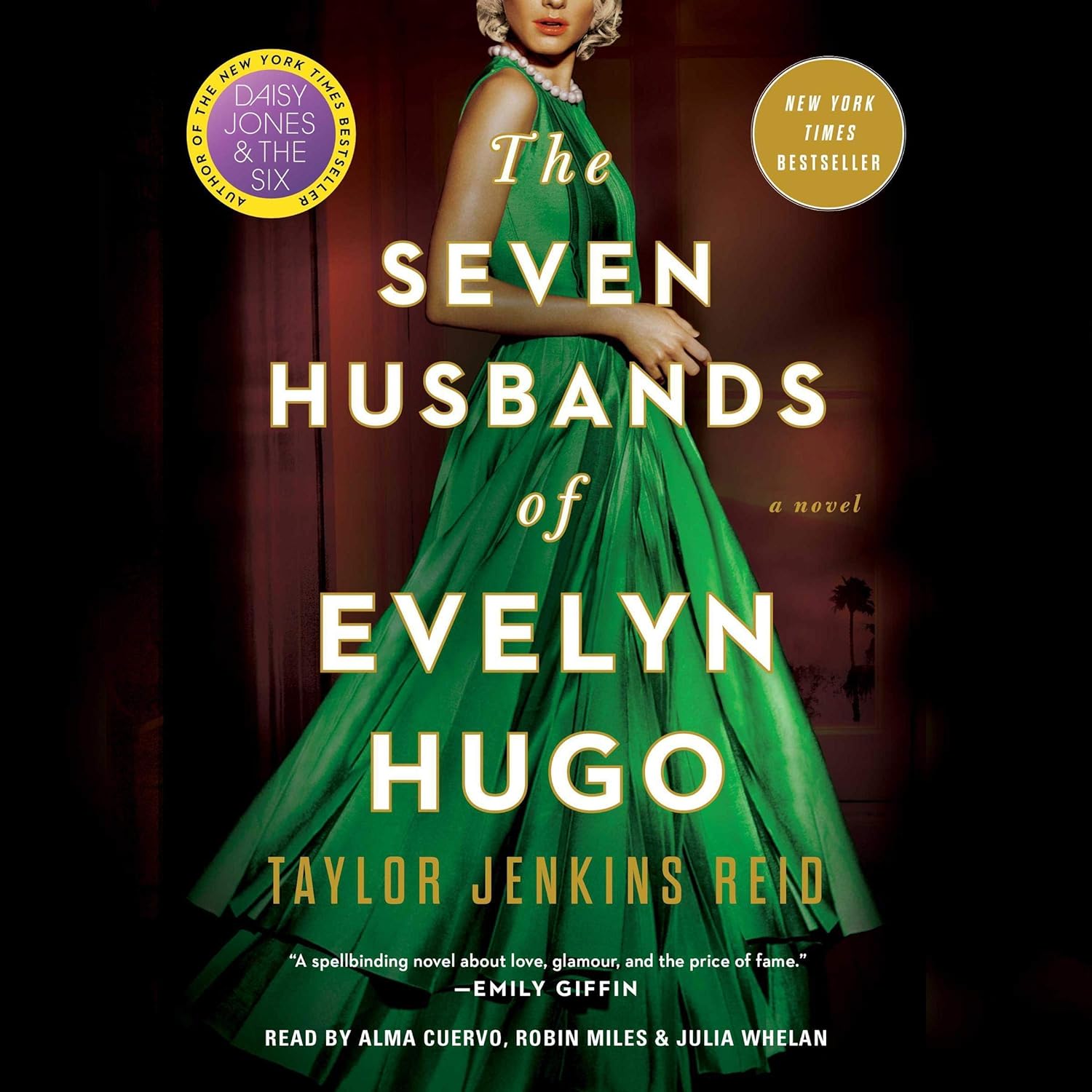
2018 Audie Award Finalist for Multi-Voiced Performance
From Taylor Jenkins Reid, “a genius when it comes to stories about life and love” (Redbook), comes an unforgettable and sweeping novel about one classic film actress’ relentless rise to the top – the risks she took, the loves she lost, and the long-held secrets the public could never imagine.
Aging and reclusive Hollywood movie icon Evelyn Hugo is finally ready to tell the truth about her glamorous and scandalous life. But when she chooses unknown magazine reporter Monique Grant for the job, no one in the journalism community is more astounded than Monique herself. Why her? Why now?
Monique is not exactly on top of the world. Her husband, David, has left her, and her career has stagnated. Regardless of why Evelyn has chosen her to write her biography, Monique is determined to use this opportunity to jump-start her career.
Summoned to Evelyn’s Upper East Side apartment, Monique listens as Evelyn unfurls her story: from making her way to Los Angeles in the 1950s to her decision to leave show business in the late ’80s and, of course, the seven husbands along the way. As Evelyn’s life unfolds – revealing a ruthless ambition, an unexpected friendship, and a great forbidden love – Monique begins to feel a very a real connection to the actress. But as Evelyn’s story catches up with the present, it becomes clear that her life intersects with Monique’s own in tragic and irreversible ways.
Written with Reid’s signature talent for “creating complex, likable characters” (Real Simple), this is a fascinating journey through the splendor of Old Hollywood into the harsh realities of the present day as two women struggle with what it means – and what it takes – to face the truth.
Oh I loved this story, which I listened to while driving, and the various characters in it. It is so memorable! It’s the heyday of Hollywood, the story of a rags-to-riches actress, with a love story that runs throughout. It’s historical, yet current. So much dialogue and yet beautifully written, it’s one I won’t soon forget.
I got mine via Audible. As I listened I thought it would make a great movie or limited series and I hear it will be – on Netflix!
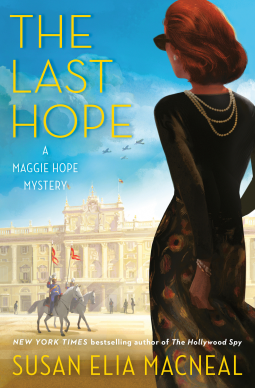
I love the Maggie Hope series by Susan Elia MacNeal, so I was thrilled to get the latest installment. These mysteries are so interesting as I learn a lot about espionage during WWII. I love the character of Maggie and how she is a strong, independent woman and so smart! Susan MacNeal has great pacing in her works and is definitely a writer who does her research.
Here’s the scoop — and is this really the LAST book in this series??? I guess we will wait and see….
Description
All will be revealed in this no-holds-barred finale of the New York Times bestselling and Edgar Award–nominated Maggie Hope series as the intrepid spy teams up with fashion designer—and possible double agent—Coco Chanel to bring down the physicist behind Nazi Germany’s nuclear program.
“Intrepid Maggie Hope’s high-stakes mission is fraught with danger and moral questions. . . . A heartfelt story.”—Cara Black, New York Times bestselling author of Three Hours in Paris
Maggie Hope has come a long way since she was Mr. Churchill’s secretary. In the face of tremendous danger, she’s learned espionage, sabotage, and reconnaissance. But things are different now that she has so much to lose, including the possibility of a family with John Sterling, the man who’s long held her heart.
British Intelligence has ordered Maggie to assassinate Werner Heisenberg, the physicist who may deliver a world-ending fission bomb for Germany. She’s shaken. An assassination is unlike anything she has ever done. How can the Allies even be sure Nazi Germany has a bomb? Determined to gather more information, Maggie travels to Madrid, where Heisenberg is visiting for a lecture.
At the same time, couturier Coco Chanel, a spy in her own right with ambiguous loyalties, has requested a mysterious meeting with the British ambassador in Madrid—and has requested Maggie join them. As the two play a dangerous game of cat and mouse, Maggie tries to get a better understanding of Heisenberg, but is faced with betrayal and a threat more terrifying than losing her own life.
Maggie desperately wants to find her happily-ever-after, but as the war reaches a fever pitch, the stakes keep rising. Now, more than ever, the choices she makes will reverberate around the globe, touching everyone she loves—with fateful implications for the future of the free world.
I’m excited today to be part of the blog tour for Vera Kurian’s new thriller A Step Past Darkness.
This was a fast and exciting read, following 6 friends who witness something terrible and come back together twenty years later when one of them dies from a supposed accident. I could see this book being for adults or YA or new age readers. What I really could see would be it as a Netflix or Hulu limited series.
Thank you for my copy and for having me as part of the tour!
Here’s the scoop:
A Step Past Darkness : A Novel
Vera Kurian
On Sale Date: February 20, 2024
9780778310761
Hardcover
$30.00 USD
Fiction / Thrillers / Psychological
448 pages
ABOUT THE BOOK:
I KNOW WHAT YOU DID LAST SUMMER meets Stephen King in this character-driven thriller about a study group of six teenagers who witness something tragic in an abandoned mine, which comes back to haunt them 20 years later.
SIX CLASSMATES.
ONE TERRIFYING NIGHT.
A MURDER TWENTY YEARS IN THE MAKING…
There’s more to Wesley Falls than meets the eye, but for six high school students, it’s home.
Kelly, the new girl and rule-follower.
Maddy, the beauty and the church favorite.
Padma, the brains and all-A student.
Casey, the jock and football star.
James, the burnout and just trying to make it to graduation.
And Jia, the psychic, who can see the future.
When these six are assigned to work on a summer group project, their lives are forever changed. At an end of the year party in the abandoned mine, they witness a preventable tragedy, but no one will take them seriously. As things escalate, they realize the church, the police, and the town’s founders are all conspiring to cover up what happened. When James is targeted as the scapegoat, to avoid suspicion, they vow their silence and to never contact each other again. Their plan works – almost.
Twenty years later, Maddy is found murdered is Wesley Falls, and the remaining five are forced to confront their past and work together to finally put right what happened all those years ago. If they can survive…
ABOUT THE AUTHOR:
Vera Kurian is a writer and scientist based in Washington DC. Her debut novel, NEVER SAW ME COMING (Park Row Books, 2021 was an Edgar Award nominee and was named one of the New York Times’ Best Thrillers of 2021. Her short fiction has been published in magazines such as Glimmer Train, Day One, and The Pinch. She has a PhD in Social Psychology, where she studied intergroup relations, ideology, and quantitative methods. She blogs irregularly about writing, horror movies and pop culture/terrible TV.




 Beth's Book-Nook Blog