My friends at Booktrope contacted me to see if I wanted to review this middle grade book. I thought Charis’ story sounded a bit like a female Percy Jackson and I was interested, so I said yes.
I just loved this story about thirteen year old Charis, chosen by the gods (Greek ones that is!) to find and save Pandora’s jar with its last true hope inside. Charis is a pretty typical teen, with typical teen problems with peers and schoolwork, but she is destined to be a great hero. Along with her buddy Gabe, and her love of Greek mythology, Charis has to face down some pretty powerful and scary opponents in order to save the world.
I just loved the character of Charis! She was strong and smart, but not perfect. Her relationships with her family and her friend Gabe were realistic. Charis is a great role model for tweens and teens, and I’ll be giving my daughter this book to read.
While the viewpoint changes throughout this story, from Charis to the gods and back again, it was not overly confusing. I think kids who like a good fantasy/adventure would enjoy this story, girls and boys alike.
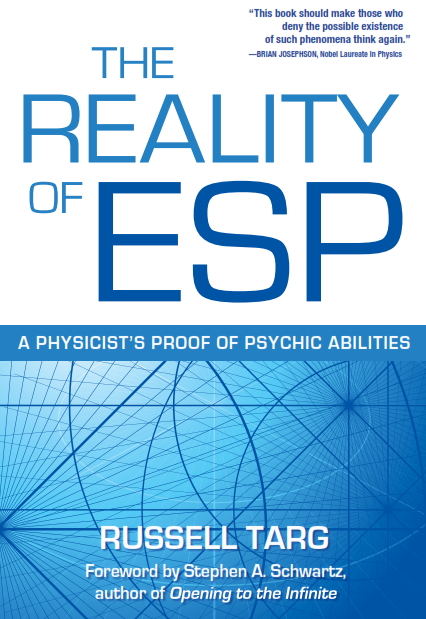
Today I am happy to be part of the blog tour for THE REALITY OF ESP – which is subtitled: A Physicist’s Proof of Psychic Abilities – by Russell Targ.
First let me say that I have always been fascinated with the concept of ESP – extra sensory perception. It’s the type of things that logic tells me I should not believe in, but intuition tells me there is reason to believe (at least to some extent). In his book, Targ, a laser physicist who worked for Lockheed, examines the evidence for a variety of ESP phenomena, including case studies of psychics, remote viewing experiments, NASA and CIA work in the area, precognition, and even how he and a group of colleagues predicted the silver market and made a lot of money in the 1980’s.
As I read this book I was reminded of a class I took as an undergraduate at the University of California: Altered States of Consciousness. Not surprisingly, my professor from that class, Charles Tart, is cited on the back of the book!
THE REALITY OF ESP is an interesting look into parapsychology and the unexplained. Using case studies, his own experience, and information from research studies, Targ presents a case for ESP where, even if you can’t wholly believe in it, you really can’t NOT believe in it! Of all the topics, I think the one I found most intriguing was the story of Pat Price, the psychic policeman. Pat had the uncanny ability to “see” crimes as they were happening, so he was a very effective policeman. He could accurately visualize places and things he had never seen before – anywhere in the world. He was instrumental in the solving of the Patty Hearst kidnapping as he visualized the getaway car and where it was at the moment (they located it) and even named one of the kidnappers and selected him from mug shots. Truly, he had some remarkable abilities.
I challenge readers to remain skeptical after reading this book!
Here’s some info from the publicist on the book and Mr. Targ:
The Reality of ESP: A Physicist’s Proof of Psychic Abilities
Nobel laureate physicist Brian Josephson says, “This book should make those who deny the existence of [psychic] phenomena think again.” In The Reality of ESP, Targ presents evidence from the $20 million research program he co-founded at Stanford Research Institute (SRI) in the 1970s. The amazing feats of psychic ability he details include: While remote viewing for the CIA, SRI psychics found a downed Russian bomber in Africa, reported on the health of American hostages in Iran, and described Soviet weapons factories in Siberia. When San Francisco heiress Patricia Hearst was abducted from her home in Berkeley, a psychic with the SRI team identified the kidnapper and then accurately described and located the kidnapppers’ car. After leaving SRI, Targ’s group made $120,000 by psychically forecasting for nine weeks in a row the direction and amount of changes in the silver commodity futures market – without error! Targ also describes a plan for developing your own psychic abilities.
About Russell Targ
Physicist Russell Targ was the co-founder of a 20 year $25 million research program investigating psychic abilities for the CIA, Army Intelligence and many other agencies at Stanford Research Institute (SRI). This previously SECRET research and applications program is now declassified. Targ has written a comprehensive book describing the remarkable accomplishments of this program.
To learn more about Russell Targ’s work as the co-founder of a 20 year $25 million research program investigating psychic abilities for the CIA, Army Intelligence and many other agencies at Stanford Research Institute (SRI), get your own copy at http://www.amazon.com/Reality-ESP-Physicists-Psychic-Abilities/dp/0835608840.
One thing I found really fun in this book was mention of a free iPhone app – ESP Trainer – which I downloaded. I am currently developing my own powers of perception!
Thanks, Nikki, for my copy and having me be part of the tour!
I saw MARIE ANTOINETTE, SERIAL KILLER at the YA session at BEA but quite frankly, I walked past it. Marie Antoinette – serial killer?? It sounded rather absurd, plus the cover had a costumed girl with blood on her – ick (just a note here: looks like the blood didn’t make it to the final cover). However, when they were doing the session, they mentioned it as a good example of the “mash up” genre: part mystery, part historical fiction, part horror, part supernatural, part contemporary. The speaker recommended it, so I immediately slipped back to the table and grabbed a (free) copy. I have to say – I really enjoyed reading it!
MARIE ANTOINETTE, SERIAL KILLER starts with high schooler Colette Iselin preparing for a class trip to France. She is struggling with her parents recent break up and the family’s new, strained, financial situation. She can’t wait to get away with her (rather mindless and not very nice) friends, to explore the place where her family has its roots. Colette’s school group has barely gotten their feet on terra firma when they hear about a serial killer running loose – beheading victims, all of whom are from long-standing French/Parisian families. Colette sees a costumed young woman and realizes she is seeing Marie Antoinette’s ghost. As you might guess, Colette realizes she may be the next victim and needs to figure out the how and why of the murders in order to stop them. Along the way she is helped by their friendly teen tour guide (insert romance!), and she comes to realize that perhaps she has been spending too much time focusing on the things that don’t matter and less time on the things that do.
All in all, this was an enjoyable read and cleverly plotted. I’m a big fan of all things French, so I love reading about people strolling through Paris and seeing the places I love.
Hey, local readers — Antoine Laurain, author of THE PRESIDENT’S HAT, is coming to Brookline Booksmith on the 30th of September (7 PM) and will read from his book (now available in the USA). Rachel, his publicist from MZPR, contacted me and this is what she had to say:
“If you want to get ahead get a hat” This was an advertising slogan in the 1940s and it remains in the public consciousness to this day. Is this just a line or does it have merit? Perhaps it’s symbolic of truly taking ownership of your life. Antoine Laurain explores this concept in his latest novel The President’s Hat (September 2013, Gallic Books). Three characters’ lives are changed forever when they discover and wear former French President François Mitterrand black felt Homburg hat. It alters their perception of themselves and has a profound affect, freeing them of self-doubt and replacing it with self-worth. The President’s Hat (September 2013, Gallic Books) is set in 1980’s France and reads like a fairytale in that the mundane becomes magical.
Antoine Laurain began his career as a screenwriter and director. His passion for art led him to take a job assisting an antiques dealer in Paris. This experience provided the inspiration for his first novel, Ailleurs si j’y suis, the story of a collector which by a strange twist of fate, was awarded the Prix Drouot, the literary prize founded by the famous Paris auction house. Two more novels followed, and now his fourth, The President’s Hat, has received acclaim by critics, readers and booksellers.
I am reading it now – thank you for my copy – and am really enjoying it (I love all things Parisian!). At just over 200 pages, it is short and sweet. I checked out the website, too. Love the “find the hat” game!
Thanks, Rachel, for sending me this information for my local Bostonians!!
Regular readers know that I LOVE the Sue Grafton alphabet mysteries and have read them all. I was so excited for “W” to come out this month and pre-ordered it on Amazon. (I actually ordered it to give to my husband for his birthday in October, but gently read it last week while he was away on business!).
W IS FOR WASTED starts with two deaths: a homeless man is found dead of what appears to be natural causes and a less than upright private investigator is found shot to death. Kinsey dismisses the PI’s death, as he was known for being less than honest. She figured he came up on the wrong end of a deal. She decides to help find out the homeless man’s name so that they can notify his next of kin. As his story unfolds, however, Kinsey finds herself drawn into the man’s life with a connection she could not have foreseen. Things become more and more complicated, and then more and more dangerous, as Kinsey becomes involved in an intricate web of dishonesty, subterfuge, and shadows from the past. Are these two deaths related? Is Kinsey much more involved than she first realizes? Will she figure it all out before more people are killed?
I really enjoyed this quick read, which was well plotted and moved swiftly. While I have been disappointed in only a few of Grafton’s stories, this was one that I really liked!
I am happy today to be part of the TRAVELS IN ELYSIUM blog tour!
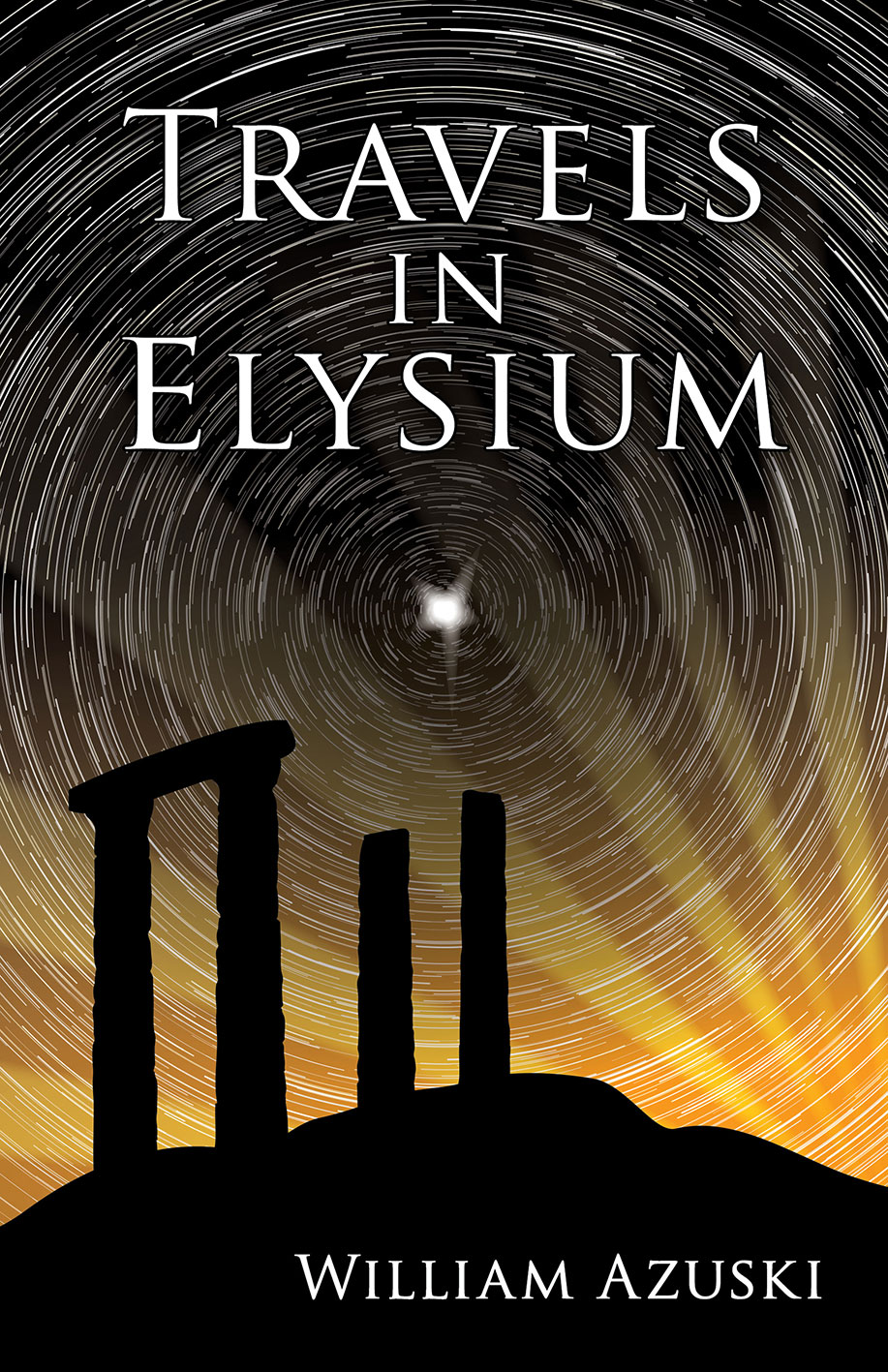
TRAVELS IN ELYSIUM is the story of Nicholas Pedrosa, a college student who gets the chance of a lifetime: working on an archaeological dig in Greece. Nico jumps at the opportunity and soon finds himself on the island of Santorini with a host of characters and personalities, all engaged in unearthing what appears to be a city (or civilization) destroyed by a volcanic eruption. Nico doesn’t know too much about his colleagues, though, and right from the start some unsettling things happen. Another young worker has been killed on the site in an accident (or was it perhaps not an accident?). Villagers swear they are seeing ghosts. Nicholas himself sees eerie moving lights at night. And, behind it all, is the somewhat enigmatic and intense Marcus Huxley, the leader of the dig with whom Nico has a love/hate relationship. What are they uncovering? And, is it just possible that they could be making the discovery of a lifetime – that they have found the lost city of Atlantis?
I enjoyed reading this (somewhat lengthy at 500+ pages) book! It is part history, part mystery, and part metaphysical thriller. I found it could be read on two levels: the top story of Nico and his experiences, and the allegory to Plato’s theories of Atlantis and reality. Metaphor plays a big role in this novel, as does allegory. Caves play a role, as does light, and the concept of reality and perception and creating your own reality. To be honest, I wasn’t intimately familiar with Plato’s writings (though I certainly knew who he was), and this book made me read a lot about him online. The more I read, the more information I found that fit this story line. Really, I thought the interplay was quite brilliant.
The end of the book makes you stop, think, and then re-read. I won’t give it away, but it is the final connection to Plato’s works.
I think this book would be great for book groups because there is a lot to discuss!
William Azuski was born in the United Kingdom, and is of British and Yugoslav descent. Travelling widely through the Mediterranean since childhood, his frequent sojourns in Greece included several months on Santorini in the 1970s, an experience that provided firsthand experience for this exceptional novel’s local setting. Writing as William Miles Johnson, Azuski is also author of the critically-acclaimed The Rose-Tinted Menagerie, an Observer Book of the Year (nonfiction), and Making a Killing, an end of the world satire, both titles recently republished by Iridescent.
(William at work)
Thank you to Nikki for my review copy and making me part of this blog tour!
If you read me regularly, you know I loved the first book in the Enchanted Attic series, “Facing the Hunchback of Notre Dame” (see review here: https://drbethnolan.wordpress.com/2012/03/11/review-facing-the-hunchback-of-notre-dame-the-enchanted-attic-series-1-by-l-l-samson/). Recently, Zondervan sent me two more books in the series: “Saving Moby Dick” and “Wrestling with Tom Sawyer”. (There’s also “Dueling with the Three Musketeers”!). In these books, the adventures continue as twins Linus and Ophelia and their friend Walter meet and have to help the book characters that have come to life and appeared in the attic of their aunt and uncle’s house. Whether they are trying to help a morose and moody Captain Ahab, or trying to keep a rambunctious Tom Sawyer under control, the kids face their adventures with intelligence and humor. I particularly like the voice of the narrator in this series, which lends itself quite well to read-aloud.
Thank you Zonderkidz Publishing for my review copies!
A while back I went to a book talk and signing by Erika Robuck held at my favorite indie: The Concord Bookshop. I loved her talk about how she came to write CALL ME ZELDA, about Zelda Fitzgerald’s time spent in a mental institution while she was treated for schizophrenia and the relationship she forms with her nurse. I bought but saved CALL ME ZELDA until our trip in August so that I could take it with me (sort of like bringing along a special friend!). I enjoyed this beautiful but heart-breaking novel and didn’t want it to end.
In CALL ME ZELDA, psychiatric nurse Anna Howard is still recovering herself from the losses of WWI (her husband is MIA and her young daughter has died of pneumonia). She works at a mental hospital and has Zelda Fitzgerald (wife of F. Scott) in her charge. She and Zelda form a bond and become friends. Anna’s emotional attachment to the troubled Zelda leads her to leave her job and work privately for the Fitzgerald family, where she is privy to the highs and lows, the sweetness and the abuse, of Scott and Zelda’s relationship. Zelda, who is schizophrenic and also seems depressed, is unpredictable yet vulnerable. She shows great brilliance, yet feels smothered and held back by Scott. Scott, meanwhile, is an alcoholic who brilliance is at times eclipsed by his selfish manipulations. Anna’s own back story exists as another story line in this book: her struggle with coming to peace with her losses and her striving to begin to live life again.
All in all, I loved this book. It read easily and I felt the character of Anna was well-developed and believable. I didn’t know too much about the Fitzgeralds before reading this novel, and I realize it is fiction, but I found their portrayal quite fascinating. This is one of several books on Zelda Fitzgerald published this year and I put in with my “woman behind the man books” – e.g. “The Paris Wife”, “The Aviator’s Wife”, “Loving Frank”, etc. This was a great read and will undoubtedly be one of my top books for 2013 – made all the more special because my copy is signed by Erika!
Blogging for Books knows that I read books about Catholicism, and sent me some info on Cardinal Dolan’s book about the recent Conclave to elect Pope Francis I. Currently, the ebook is only $1.99. While I haven’t read it, it has garnered positive reviews and sounds interesting: getting an insider’s look at what was happening during those days at the Conclave.
Cardinal Dolan discussed his book on the Colbert report. You can see that here:
If you read it, be sure to comment on your thoughts! Thanks, Blogging for Books, for offering me a free copy (of another book I need to choose) for promoting this one!
I found ROSE UNDER FIRE on Net Galley and thought it sounded intriguing. While presented as a YA read, this book was quite intense emotionally and I thought could be enjoyed by adults as well. In ROSE UNDER FIRE, WWII courier pilot Rose Justice finds herself downed by Nazi aircraft into German territory. Terrified, she realizes that they don’t intent to harm her, per say, but keep her in a work camp. That camp turns out to be Ravensbrück, the notorious women’s concentration camp. Rose spends several months there, through the winter, before she is liberated in a harrowing escape.
I could not put this book down. While it was suspenseful and “exciting” (notice quotes), it was haunting and disturbing, and really painted such a vivid picture of Ravensbrück that I had nightmares (full disclosure: I’m a pretty sensitive person). The book starts with Rose’s daily diary of events. She’s a courier, an American actually, working for the British. Her life has been pretty innocent up until the war. She is only nineteen. She flies to Paris on a job and has a wonderful day there, including “buzzing” the Eiffel Tower. She is scheduled to fly back to England the next day, but then we realize that Rose is classified as “missing”. Family and friends try to be hopeful but presume she is most probably killed. The book then is Rose’s writings of her memoir of the time spent in camp as she stays at the Ritz in Paris to recuperate. The end of the book is in Rose’s present time, as the war ends in Europe.
Before reading this book, I had little knowledge of Ravensbrück. I knew it was a concentration camp and I thought it was for women. The portrayal of the camp in this book is really remarkable. I could see it so vividly. As with a lot of WWII literature, the resiliency of the prisoners to stay alive was incredible and awe-inspiring. I know it’s fiction, but people experienced what these women did, and it is both fascinating and horrible. A large portion of the book centers on the Polish girls in the camp who were used for experiments by the Nazi’s. Called “the rabbits”, they were experimented on so that the Germans could figure out how best to treat war wounds and infections. Wish I could say Ms. Wein made this up, but she didn’t. Wein is the author of CODE NAME VERITY, which I have not read, but which I purchased so that I could.
Highly recommended if you are a reader of this genre, but be prepared. YA doesn’t mean this book is just for the kids. In fact, I would hope that if young people were reading this book (which would be an excellent hs classroom choice) that adults are talking to them about it and discussing it with them.
Thanks, Net Galley and Miramax Publishing, for my copy!





 Beth's Book-Nook Blog